
The industry shows a growing demand for efficient filtration in industrial and irrigation systems. Buyers often make a common mistake during procurement. They focus entirely on the filter housing while ignoring media performance. This oversight causes long-term issues. The disc filter media directly impacts filtration precision. It also dictates the system lifespan and ongoing maintenance costs. This guide delivers a practical comparison to support smarter procurement decisions. It aims to help professionals select the right industrial water filtration media and reliable water filtration solutions for irrigation.
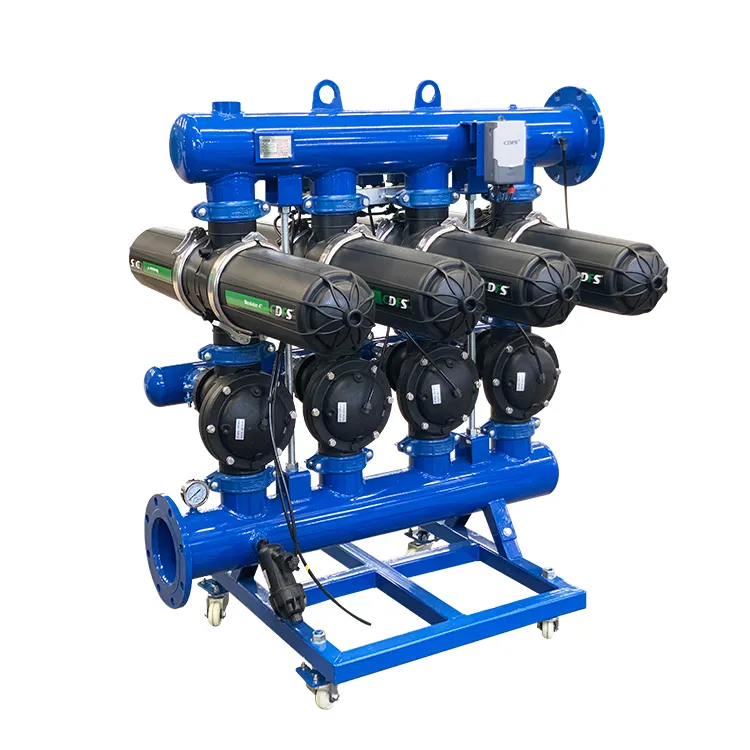
Many operators debate the merits of a disc filter vs screen filter, but understanding media fundamentals provides clarity.
The media utilizes a stacked disc design with micro-grooved surfaces. The filtration process effectively combines surface and depth filtration. The system utilizes automatic compression and release during the filtration and backwash cycles.
The specific groove design determines the micron rating of the filter. The interaction between water quality and the media structure plays a major role in overall filtration efficiency.
This represents the most widely used material in the filtration industry. Key properties include strong chemical resistance and excellent cost-effectiveness. Typical applications include agricultural irrigation and general industrial water processing.
This material provides enhanced strength and durability for demanding projects. It is highly suitable for higher pressure systems. Users benefit from its better resistance to deformation under stress.
Some systems require specialized materials for optimal performance. Options include anti-biofouling coatings and UV-resistant materials. These specialized materials find application in challenging environments, such as wastewater and seawater treatment facilities.
The industry offers common precision ranges between 20 and 400 microns. Buyers must understand the trade-off between filtration precision and the overall flow rate.
A high holding capacity holds immense importance in reducing cleaning frequency. This parameter has a direct impact on reducing system downtime.
The chosen media must demonstrate strong resistance to pressure and deformation. This structural integrity ensures long-term performance stability for the entire setup.
Engineers heavily evaluate performance under acidic or alkaline water conditions. They also test the media's resistance against fertilizers and chemicals. This resistance holds great importance for both agricultural and industrial use.
A well-designed disc filter media ensures ease of cleaning. Efficient backwashing promotes the rapid recovery of filtration performance.
Buyers must evaluate a basic cost versus lifespan comparison when choosing materials. Each material aligns clearly with suitable project types.
Projects demand application-based selection for optimal results. Fine filtration works best for drip irrigation and precision systems. Coarse filtration suits pre-filtration stages perfectly.
Coated media offers significant anti-fouling benefits versus a higher initial cost. Buyers must analyze the ROI perspective for long-term projects when considering this material upgrade.
Farmers face specific key concerns in the field. These concerns primarily involve clogging prevention and fertilizer compatibility. Experts provide recommended media configurations for building a reliable irrigation disc filter system.
Industrial facility managers focus on continuous operation and critical equipment protection. They must strictly adhere to specific media durability requirements to maintain smooth operations.
These recovery systems require handling high suspended solids effectively. The importance of anti-clogging performance cannot be overstated in these highly challenging setups.
A basic purchase analysis reveals why cheaper media may cost more over time. Investing in quality pays off.
Facility operators must factor in the frequency of replacement. Labor implications also add heavily to the long-term operational budget.
High-quality media generates tangible energy savings from stable flow rates. Reliable media also leads directly to significantly reduced downtime.
A reliable supplier consistently guarantees the precision of their groove design. They also maintain strict material quality standards across their product lines.
Top manufacturers demonstrate the ability to adapt media to specific project needs. Flexibility is a hallmark of a good supplier.
Ongoing support holds tremendous importance for international buyers. Quality suppliers always offer robust support in system design and troubleshooting.
Disc filter media operates as a critical factor in overall filtration success. Professional decision-makers understand the profound importance of balancing performance, cost, and specific application needs. The final insight remains clear and proven: the right media choice determines long-term system efficiency.
We invite inquiries for customized disc filter solutions tailored to your unique specifications. Our engineering team provides precise media selection guidance based on thorough water analysis. We also offer detailed project-based recommendations to ensure operational success. We proudly highlight our extensive export experience and deep technical engineering support. We guarantee a fast response for all international clients. Explore an advanced automatic disc filter to upgrade your infrastructure with superior disc filter media today.
Disc filter media acts as a critical factor in filtration success. The media directly impacts filtration precision, system lifespan, and overall maintenance costs.
The media features a stacked disc design with micro-grooved surfaces. The unique filtration process effectively combines surface and depth filtration. The system utilizes automatic compression and release during the filtration and backwash cycles.
Your project requires application-based selection. Fine filtration works best for drip irrigation and precision systems. Coarse filtration perfectly suits pre-filtration stages.
Standard polymer, such as Polypropylene or Nylon, serves as the most widely used material. Other professional options include reinforced engineering plastics for higher pressure systems and specialty coated or modified media for challenging environments.
Choosing the correct media significantly impacts ROI. Cheaper media may actually cost more over time due to the higher frequency of replacement and related labor implications. High-quality media improves system efficiency by providing energy savings from stable flow and creating reduced downtime.



 EN
EN
 FR
FR
 NL
NL
 RU
RU
 AR
AR
 VI
VI
 LO
LO
 RO
RO
 TH
TH
 MY
MY
 MS
MS
 PT
PT
 ES
ES
 KO
KO
 BE
BE
 JA
JA
 FIL
FIL
 KA
KA
 DE
DE
 IT
IT

